
The overwhelming defeat Sunday of Hungray’s Victor Orban was a huge loss for the already unpopular U.S. President and his second in command.
Vance had travel to Hungary to campaign for Orban, but it did no good — in fact, it more than likely hurt. Peter Magyar, a former Orban loyalist and the leader of the main opposition party, will now take over as Hungary’s prime minister once the newly elected Parliament meets.
With 66 percent of votes counted, Magyar’s opposition party was on course to win 137 seats — more than a two-thirds majority. Mr. Orban’s party, Fidesz, was expected to win just 55.
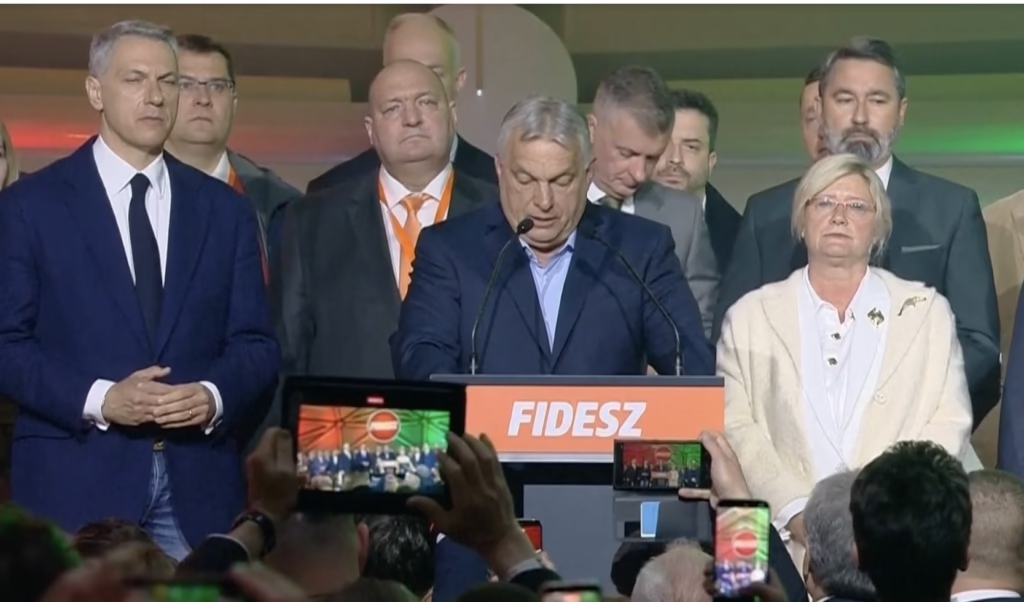
Hungary’s Victor Orban (center), an enemy of Democratic governance, concedes defeat in Sunday’s elections.
Shortly before polls closed, the electoral authorities said that more than 77 percent of registered voters had cast ballots, the highest turnout in a Hungarian election since the collapse of Communism in 1989 and the start of democracy.
The implications of the outcome extend far beyond Hungary’s borders. The next prime minister may help alter the course of the war in Ukraine, a neighbor that Mr. Orban has cast as an enemy of Hungary, and affect European security. And the results will be looked at by populists around the world who view the Hungarian leader as a model of success and of pugnacious defiance of the mainstream.
After the results, large crowds of mostly young people thronged the banks of the River Danube in front of the Parliament Building, cheering and waving Hungarian flags. Many were stunned by the speed and scale of the defeat of Mr. Orban, whose party won the four previous elections easily.
— From The New York Times and other news services